Showing posts with label Final Fantasy. Show all posts

Monday, April 2, 2012

Review: Final Fantasy XIII-2

As I write this, I'm 32,000 feet in the air over the Pacific, 7 hours in to a 14-hour flight from Washington D.C. to Tokyo. I'm bored, hungry, and my eyes have desiccated to the point where my contact lenses would be more comfortable if I replaced them with Wheat Thins. Also, there's some sort of Japanese youth sitting next to me who keeps falling asleep on my shoulder. I can't think of a better time or place to write down some thoughts about my latest Japanese RPG experience, Final Fantasy XIII-2.


Final Fantasy XIII-2 (FFXIII-2) is a direct sequel to Final Fantasy XIII, and follows the exploits of time-traveling schoolteacher Serah Farron and her post-apocalyptic boy-toy Noel Kreiss. Serah is the younger sister of Lightning, the protagonist of Final Fantasy XIII... because if you're going to make a direct sequel within an expansive RPG franchise, it's a good idea to take the game with the least interesting cast, and then make an entire game about the least interesting character among them.

Design: 4/5

One of the first things you'll notice about FFXIII-2 is that while its predecessor spanned three discs, it manages to fit onto only one. The perceptive gamer might identify this difference as a sign that FFXIII-2 contains a fair amount of recycled material, and in fact they would be spot-on. Final Fantasy XIII-2 begins with a beautifully rendered and fantastically directed extended cut scene, but this keen bit of cinematography starts to lose its impact when clips of it begin to reappear again and again later in the game. Moreover, the double-dipping doesn't stop with cinema scenes; a major mechanic of the game is time travel, meaning that you'll revisit the same handful of locations multiple times throughout your journey.

Most of the game environments are fairly interesting,
which is a good thing since you're going to see them way more than once.

Of course, repetition is not necessarily a bad thing. Perhaps the biggest complaint about Final Fantasy XIII was that it was painfully linear, and Final Fantasy XIII-2 goes to great lengths to break from this mold. During most of the game you can navigate freely through time and space via the Historia Crux (a glorified menu screen), and there's a passable number of secrets to be found by revisiting previous locations.

Unfortunately, I'm of the mind that most of the point of freedom in an RPG is side questing, and in this respect FFXIII-2 falls pretty short. Most of the available extracurricular activities are of the basic monster-hunting and fetch-quest varieties, and since the game doesn't have much in the way of loot, the primary rewards are "fragments", FFXIII-2's version of the requisite useless collectible. The end result is that only the most rabid of completionists would be compelled to finish most of these additional challenges.

Artistic: 3/5

As a direct sequel, Final Fantasy XIII-2 continues the aesthetic of its predecessor fairly closely and with few innovations. Perhaps the largest stylistic deviations are Noel and Caius Ballad (the game's primary antagonist), both of whom have sort of gypsy-slash-Native-American thing going. I suppose their look is meant to conjure imagery of a dying world dominated by a nomadic and tribal culture, but instead I kept pretending Caius was the teary-eyed Native American from the Keep America Beautiful commercial, and that he had finally lost his shit and decided to end all of existence.

It's really hard to take a villain seriously when he has feathers in his hair.

Although the visuals are largely harmless, the audio most certainly is not. Through much of the game your ears will be assaulted by Japanese pop/rock featuring frantic beats and over-the-top synthesized solos. Most of the time this soundtrack runs counter to the look and feel of the game at the time, to the point where you'll wish there was an independent volume slider for the music in the options menu. (There isn't one.)

Narrative: 3/5

As far as I can tell, Final Fantasy XIII-2 is about a girl whose fiancee (Snow Villiers) leaves on a selfless quest to find the truth about her missing sister; then while he's gone, she runs off with a mysterious visitor from the future to partake in an adulterous sexcapade through time and space. Of course, this sordid little drama is set against the backdrop of a much larger and far more hackneyed plot (saving the world from a villain who wants to end existence for bizarre personal reasons), but I think Serah's love life is the more interesting story here.

Final Fantasy XIII-3 had better feature some sort of "moogle death camp"...
which I suppose would also be a good name for an all-metal Final Fantasy cover band.

Actually, I'm not compelled to complain too much about the plot, because it honestly makes no more or less sense than most other J-RPGs. What I do feel the need to complain about is Mog, Serah's cloying moogle sidekick. When it comes to moogles in Final Fantasy games, I can tolerate a few twirls of the pom-pom and the odd interjection of "kupo!", but Mog elevates cuteness to the level of a war crime. After 40 hours of listening to that fat little sack of pixie dust spout useless information in his annoying little baby voice, even an 8-year old girl would be driven to stuff him into her Hello Kitty backpack with a pile of rocks and hurl him into the nearest river.

Gameplay: 4/5

If you liked the battle system in Final Fantasy XIII (which I did) then you'll be happy to hear that this, too, is largely unchanged. The flow of battle is still controlled by switching between "paradigms" (pre-set combinations of character roles), with individual actions handled largely handled automatically. Thus, instead of controlling each party member directly as in most RPGs, the player acts as more of a conductor, leading the characters through the tempo and key changes of each battle. The primary difference in FFXII-2's battle system is that the third party spot is now filled with a set of monsters, chosen from your private collection. Despite the fact that collecting monsters is to RPGs what "Freebird" is to cover bands, this change does have the favorable effect of altering the paradigm strategy a bit, as each monster has a fixed role and thus not every paradigm combination is available.

The battle screen has a lot going on,
though fortunately the paradigm system lets you take more of a "big-picture" kind of view.

One of the reasons I like the paradigm concept (or perhaps we should call it the "paradigm paradigm") is that it allows for fast-paced and highly aggressive battles. Most encounters only last tens of seconds, and even boss fights may last only a few minutes. It definitely encourages one to pay attention, since even spending a few too many seconds in the wrong paradigm can leave your party in ruin. Fortunately, it's always possible to retry a battle, an option which I exercised on more than one occasion. Also, note that although AI-controlled combat is traditionally problematic, it is less of a issue here, since consumable items must be manually used, there's no magic points, and the characters' health is fully restored after each battle... so even exercising the poorest possible judgement, there's little in the way of lasting damage that a rogue AI can do.

Summary

Final Fantasy XIII-2 does a respectable job trying to take the reins from one of the worst outings in the Final Fantasy canon. While not outstanding by any stretch of the imagination, given its raw material, perhaps it's as good as it could possibly be.

For those of you who are interested, below is my "rating versus hours of gameplay graph" for Final Fantasy XIII-2, which I talk about more in this post.


Tuesday, March 20, 2012

Criticism, Video Games, and the Quest for More Data

Being graded is generally not a fun experience. If as a student you've ever done an art project or written an English paper, then you've probably had the experience of having one of your creative efforts dissected, examined, and then branded with an arbitrary alphanumeric grade. If your experience was like mine, a wholly subjective expression of your thoughts and emotions was relabeled with a "check" or "satisfactory", or some other, similarly meaningless accolade—and I'll bet it happened with all the empathy and ceremony of a life insurance actuary placing a dollar value on a human life.

Remarkably, despite most of us having shared this soul-deadening experience in our youth, as adults we don't hesitate to do it to other people all the time. Every day we find ourselves criticizing someone else's creative output, be it movies, music, theater, or restaurants. And don't even get me started if you're a teacher... all you people do all day is grade other people's ideas. It's sick.

Unfortunately, on some level we need all this criticism. Imagine you're trying to impress a hot girl on a first date... it's a big world out there, and without restaurant and movie reviews, dinner and a movie could end up being Olive Garden and John Carter. That's why I try to do my part in the video game world by mixing a few spirited reviews in with the rest of my inane ramblings. However, at all times I try to remain conscious of the dangers of attaching a numerical quantity to an inherently complex and subjective experience.

Originally, I thought the easiest way to mitigate grading errors would be to write my reviews using a symbolic representation of my ideas, a.k.a. "words". Then, even if I got my review grade "wrong", someone could read these "words" to see what I really thought about the game. But then I realized: who the hell wants to have to read things just to get information about stuff? No one, that's who.

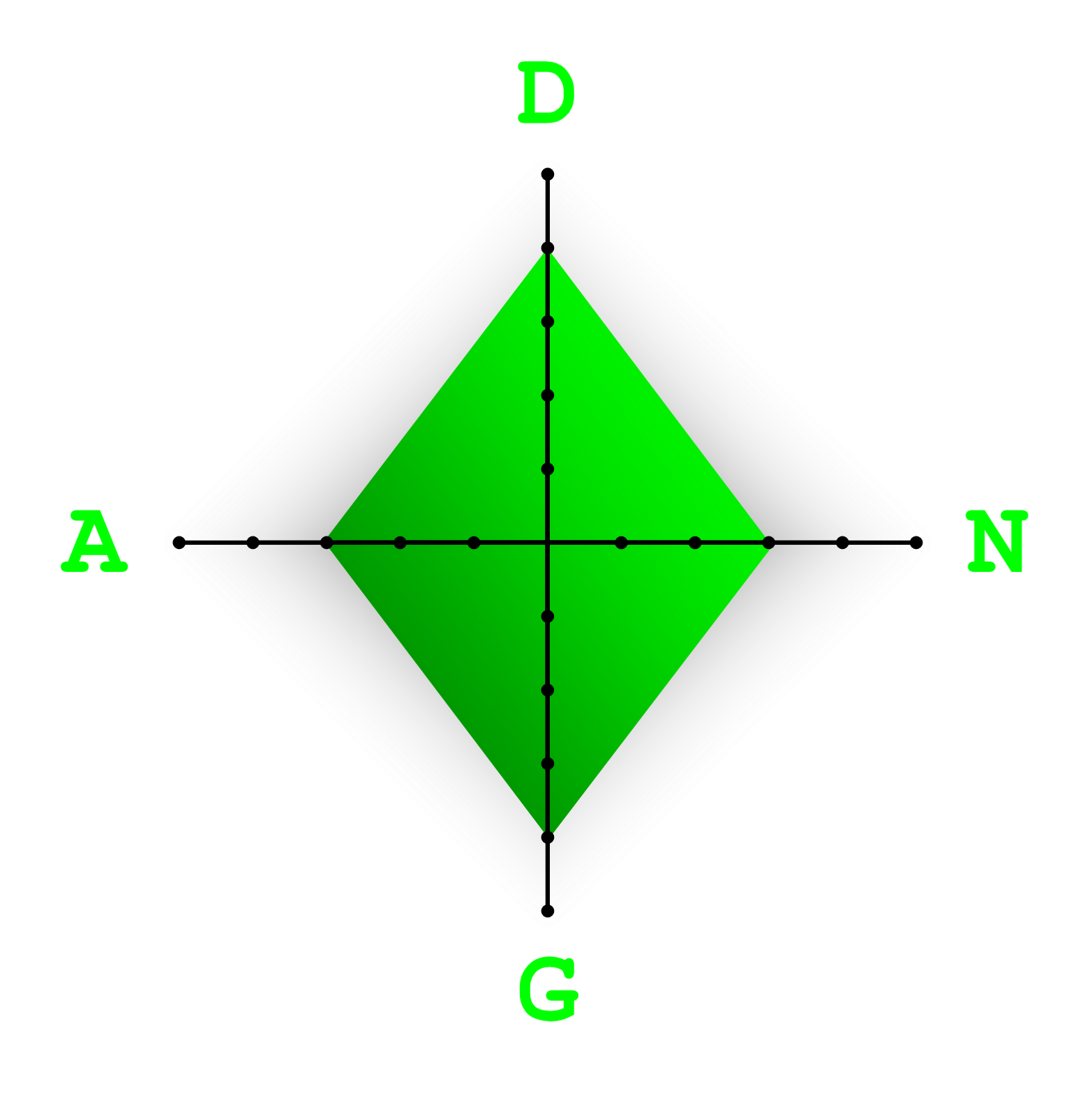
DANG scores from my review
of Saints Row: The Third
So then I thought, maybe we just need more numbers. That's how I came up with the DANG rubric I typically use in my reviews, wherein I rate each game's Design, Artistic, Narrative, and Gameplay elements separately. Unfortunately, instead of making my review scores more reliable, this practice probably just makes them approximately four times more arbitrary. On the other hand, it does give my reviews with authoritative voice and pseudo-scientific air of your typical USA Today infographic.


However, since I'm (1) an applied mathematician, (2) not typically one to give up, and (3) generally incapable of outside-the-box thinking, I decided that the answer must be even more numbers. That's why during my recent slog through Square Enix's Final Fantasy XIII-2, I decided to record a separate rating for every hour of gameplay.

Figure 1: My rating versus hours of gameplay for Final Fantasy XIII-2.

Figure 1 is a chart of my ratings for the first (and probably last) 40 hours I played the game. Each bar represents my impression of FFXIII-2 for the corresponding hour that I played it, on a scale of one to five stars.

While to the untrained eye Figure 1 may look like an uninformative queue of green french fries, to me it's dramatic recap of my FFXIII-2 gaming experience, told through the sultry interpretive dance of the bar graph. I recall the game getting off to an unimpressive start, picking up a bit here and there over the first 10 hours. Just as I was beginning to feel optimistic, I entered the 2-star valley from 9:00-12:00, a desperate little trench dug built of inane side quests and my first trip to "Academia", a location in the game with pitifully weak enemies but a painfully high encounter rate. (The irony of how much I hated this "Academia" was not lost on me.)

The game picks up a bit again in the third quarter, as by that point you've earned a bit of freedom, and your characters have finally leveled up enough to withstand a stiff breeze without giving up the ghost. After this, we slowly lumber to the game's finale, which was tolerable enough to earn one last 4-star rating.  (The final 2-star entry corresponds to the extra hour wherein I attempted a few post-ending side quests, which succeeded in quickly cementing my decision to never play this game again.)

However, let us return to my original quandary re grading: does Figure 1 gives a more reliable indication of my opinion of Final Fantasy XIII-2's quality? For example, is it a better representation than a single score? I'll admit it's a bit more cumbersome than a few simple stars, but I kind of like the idea of a review having a time series of ratings... a "score vector", if you will.

If you like, I suppose you can always distill the data into a single number; for instance, the arithmetic mean of the points is around 3.07, and I suppose 3 stars is probably what I would give this game in a review. Incidentally, if you take into account that the standard deviation is about 0.67, it seems pretty unlikely that I'm too confused about my opinion (e.g. that deep down I really think Final Fantasy XIII-2 is a 1-star or a 5-star game.)

Figure 2: A histogram of the scores, along with a normal (Gaussian) distribution with the same mean and standard deviation. (For you stats folks out there, I'm aware of the issues of using a continuous distribution to represent data over a discrete sample space, but this is a video game blog, so let's not get too uptight about it.)

On the other hand, if you can resist the temptation to just take an average and be done with it, I believe there's a lot more interesting things you can do with this data.1   For example, if you collected it across multiple people, you could get an idea of how much their opinions varied at different times in the game.  (With its "controversial" endings, I wonder what the distribution for the last few hours of Mass Effect 3 would look like.) Or, you could develop some statistical models (such as a hidden Markov model) for how the quality of video games evolve, and then try to use them to predict how long you could play a given game before you started to hate it. (Maybe we'll also do some principal component analysis for the hell of it, because I really start to lose my shit if I go more than 24 hours without computing the eigenvalue of something.)

In the meantime, I think I'm going to keep recording these hourly ratings and other kinds of data as I play, and continue thinking about fun and unnecessarily convoluted ways to use them. If you have any interesting ideas, I'd love to hear them.

___________________
I'm aware that some people believe one should write "these data" instead of "this data". I'm also aware that some people are pretentious assholes. (Although I'm careful never to say "your dildo".)

Monday, December 27, 2010

Xbox Achievements: Or, How Developers Can Save Me From Myself

I recently decided that the number one most significant gameplay innovation of the last decade is the achievement system. You may argue with this, but I can think of no other concept that has more radically altered the way I play video games (not even multiplayer). There’s a certain aspect of revealing your entire body of gaming accomplishments that gently but persistently warps mind and spirit.

For example, back when my virtual conquests were a private affair, I could exercise a bit more self control regarding my gaming agenda. Let’s say it’s the spring of 2002 and I’ve got 200 spare hours of my life just lying around. If I decided to use those hours to drink beer with my friends and/or have sex with my girlfriend, no one needed to know I did so in lieu of power-leveling that little bitch Tidus enough to take on the secret Final Fantasy X boss Nemesis. Moreover, since there was no public record of this decision... who knows what really happened? With enough time and self-delusion... maybe history holds that I did defeat Nemesis after all.

In the Age of Achievement we have no such luxury. Now all our triumphs and failures are laid bare for the world to see, and I believe such exposure gives game designers a disturbing power over the way we play video games. To emphasize the seriousness of this issue, I thought I would list the top five most perverse behaviors I’ve been driven to by the quest for Gamerscore.